
Straight vs. Diamond vs. Helical Knurling Inserts: A Comprehensive Comparison!
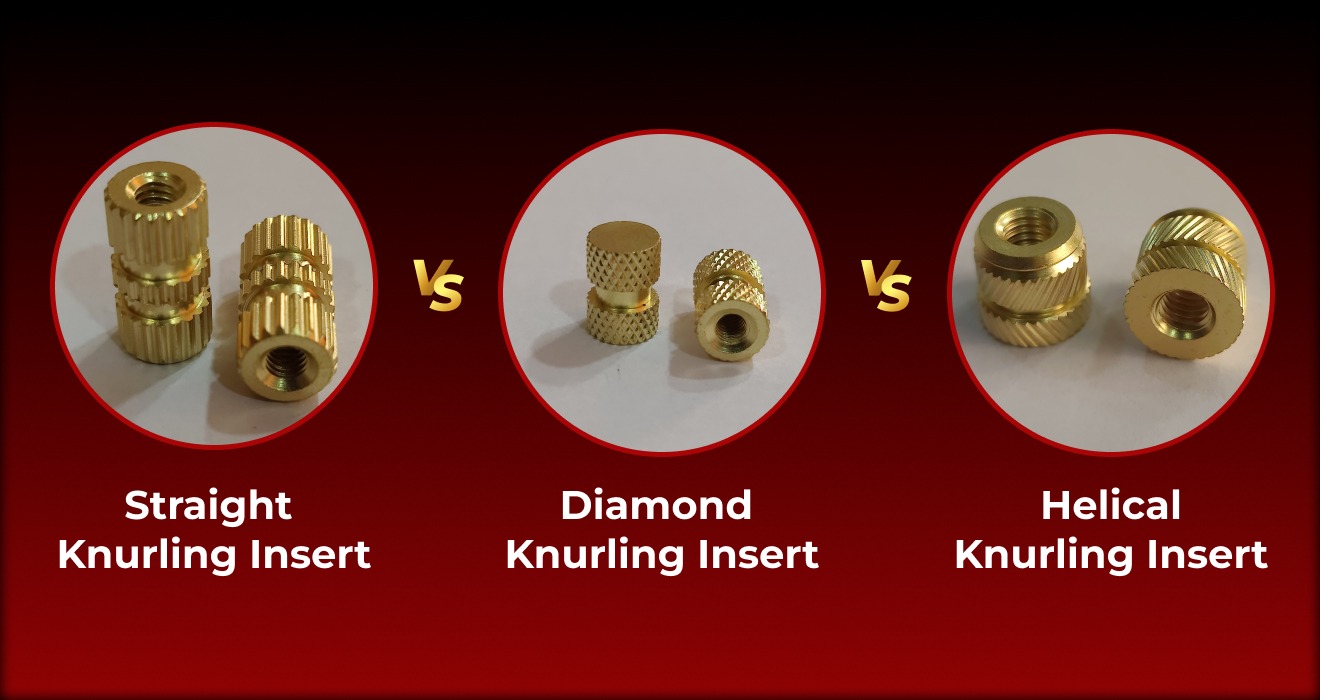
Knurling is a common machining process used to improve grip, enhance aesthetics, and add functional value to components used in fastening and assembly. At Ravi Products, straight, diamond, and helical knurl inserts are widely applied to meet diverse industrial and engineering requirements. Each knurl type delivers different performance characteristics in terms of grip, durability, manufacturability, and user comfort. This comparison by Ravi Products highlights the performance differences between straight, diamond, and helical knurling inserts to help customers and designers select the most suitable option for their applications.
What are Knurling Inserts?
Knurling inserts are replaceable, cutting or forming elements mounted in knurl holders to produce patterned surfaces on a workpiece. Unlike fixed knurling wheels, inserts allow for faster changeovers, consistent pattern accuracy, and improved tool life, especially in production environments.
Knurling inserts are commonly used on lathes and CNC machines to create controlled surface textures without significantly altering the structural integrity of the component. By selecting the correct insert geometry and pattern, manufacturers can achieve reliable grip performance and uniform results across batches.
Types of Knurling Inserts
Straight Knurling Inserts
- Straight knurling inserts produce parallel, linear ridges along the length of a cylindrical surface. These inserts are designed for applications where a moderate, uniform grip is required without aggressive texture.
- Key characteristics of straight knurling inserts:
- Simple and consistent ridge formation
- Lower cutting pressure compared to complex patterns
- Suitable for softer materials and thin-walled components
- Commonly used in knobs, adjustment screws, and control handles
- Straight knurling inserts are easy to align and are often preferred in applications where functionality is prioritized over aggressive grip.
Diamond Knurling Inserts
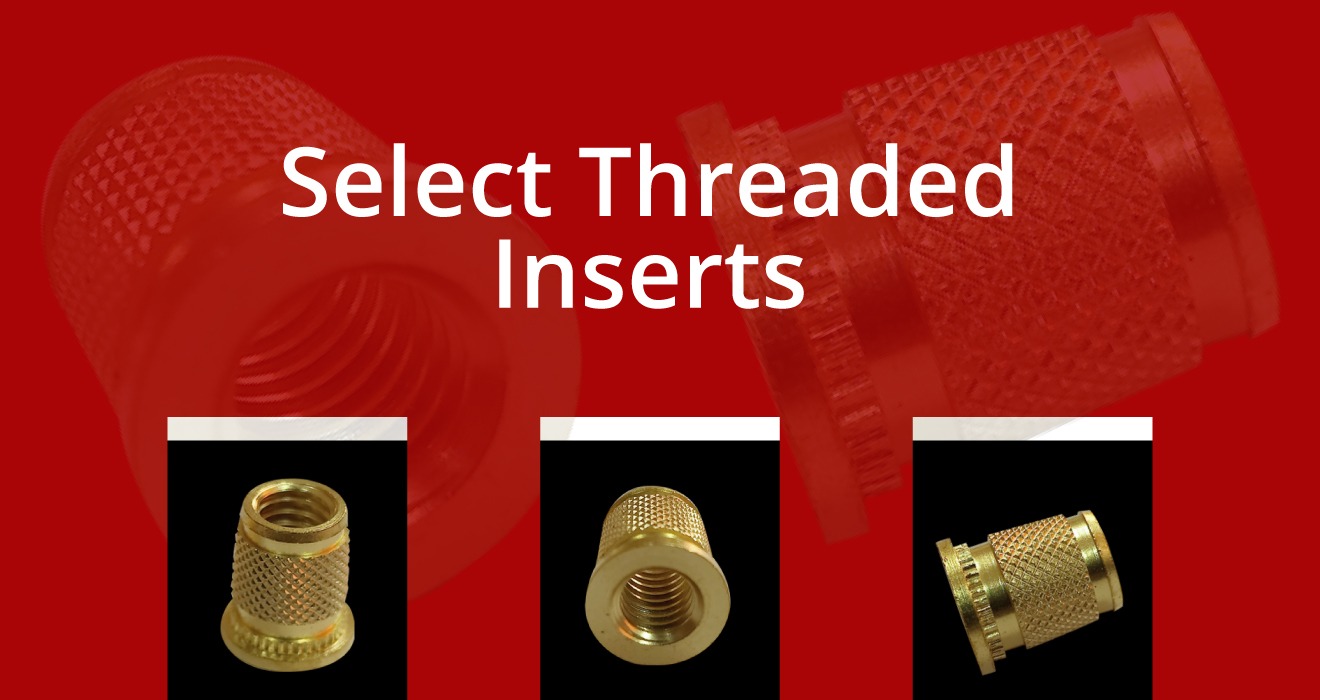
- Diamond knurling inserts create a cross-hatched pattern that forms diamond-shaped ridges. This is achieved using paired inserts or insert geometry designed to form intersecting angles.
- Key characteristics of diamond knurling inserts:
- Intersecting helices form raised diamond shapes.
- Delivers non-slip friction in all directions
- Ideal for handles, knobs, tools, and medical devices.
- Ensure strong retention in press-fit and over molded inserts.
- Available in multiple pitches, angles, and diameter increases.
- Diamond knurling inserts are widely used in hand tools, fasteners, industrial knobs, and components requiring maximum traction.
Helical Knurling Inserts
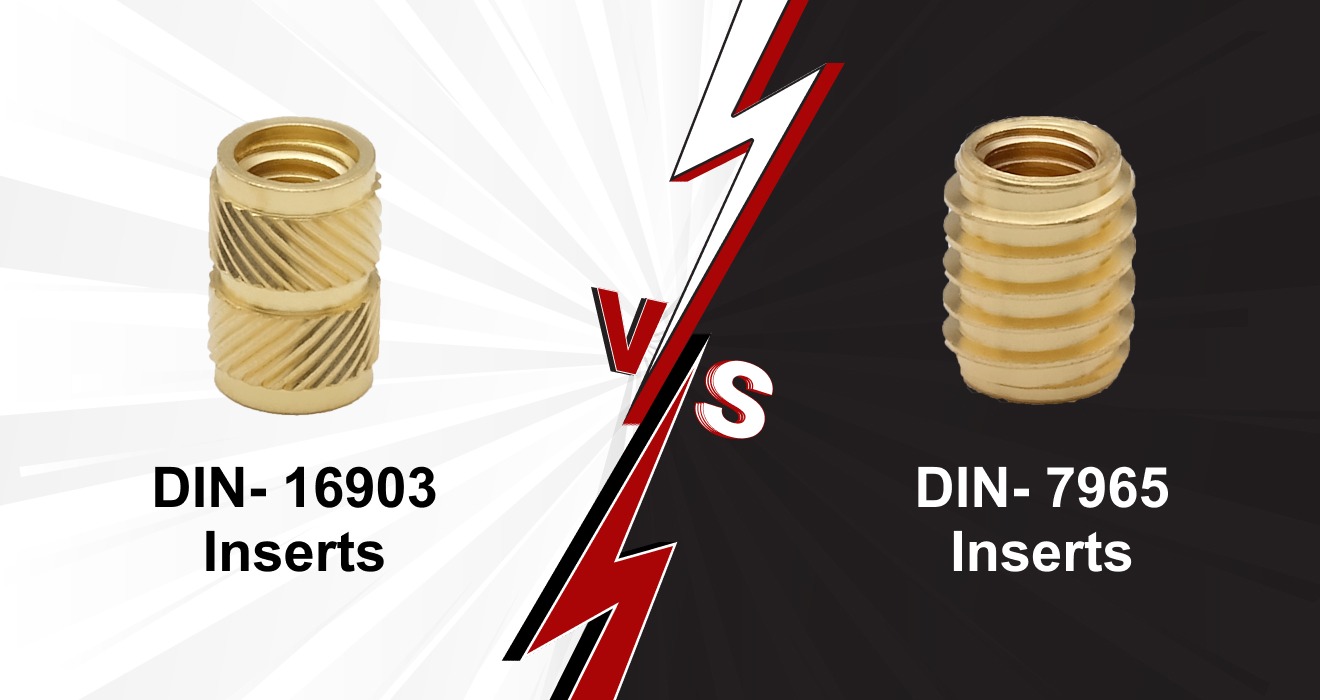
- Helical knurling inserts produce a continuous spiral pattern around the workpiece. These inserts are designed with an angled tooth profile that creates smooth, flowing ridges.
- Key characteristics of helical knurling inserts:
- Helical knurl pattern embeds into the host material for maximum grip.
- Provides high pull-out strength and torque resistance.
- Precision-formed internal threads ensure long-term durability.
- Supports Metric, UNC, and UNF thread standards.
- Designed for repeated assembly without thread wear.
- Helical knurling inserts are often selected for precision components, premium products, and applications where both performance and visual appeal matter.
How to select the right knurling Inserts?
Choosing the correct knurling insert depends on application requirements rather than just appearance. Consider the following factors:
- Material Quality: High-grade carbide or HSS materials provide enhanced durability and wear resistance.
- Knurling Pattern: Different patterns such as straight, diamond, or circular can influence the grip and aesthetics of the workpiece.
- Diameter Compatibility: Inserts must match the diameter of the workpiece to ensure accurate knurling.
- Chip Removal Efficiency: Designs that allow for effective chip evacuation help maintain a clean working area and enhance tool life.
- Insert Geometry: The shape and angle of the insert affect cutting performance and surface finish.
- Ease of Replacement: Inserts should be easy to install and replace, minimizing downtime during machining.
Selecting the right insert ensures consistent results, reduced tool wear, and improved component performance.
Main Parameters of Knurling Inserts
To achieve optimal results with knurling inserts, several machining parameters must be controlled:
- Insert pitch and tooth profile
- Workpiece diameter before knurling
- Applied pressure and depth
- Feed rate and spindle speed
- Helix angle (for helical inserts)
- Tool alignment and holder rigidity
Correct parameter selection improves insert life, pattern definition, and surface finish consistency.
For reliable knurling solutions and precision-engineered components, we are here to help. Whether you need straight, diamond, helical or any types of knurling Inserts tailored to your application, our team can support you from custom design to bulk production. Contact us at export@raviproducts.com or call us on +91 97253 14757 to discuss your requirements and request a quote. Get in touch and let us help you achieve the right performance and quality for your components.