
How to select the right type of threaded inserts?
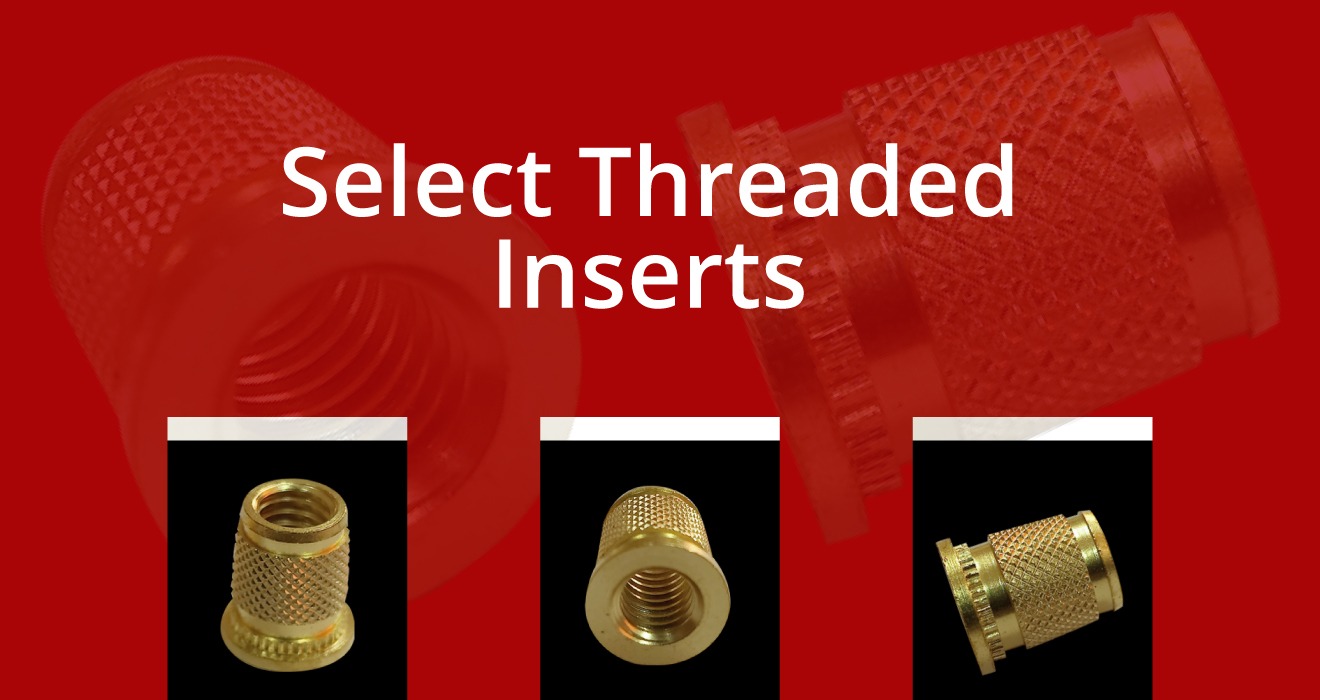
Threaded inserts are essential components used to create strong and reliable threaded connections within materials that are too thin or soft to support a screw thread on their own. Choosing the correct type of threaded insert is crucial for ensuring durability, strength, and ease of assembly. Companies like Ravi Products, a trusted manufacturer of precision engineered fastening solutions, offer a wide range of threaded inserts designed to meet diverse industrial and commercial requirements. This guide will help you understand the different types of threaded inserts, their applications, and the key factors to consider when selecting the right one for your specific needs.
What are threaded inserts?
Threaded inserts are also known as threaded bushings or threaded sleeves, provide a secure threaded attachment point within a base material. They are typically made of stronger materials such as brass, aluminum, or stainless steel and are installed into a pre-drilled hole.
Common Uses of Threaded Inserts
Threaded inserts are widely used across multiple industries, including:
- Furniture manufacturing – Attaching legs, arms, and other components to furniture.
- Plastics and composites – Providing a secure thread within thin plastic or composite materials.
- Woodworking – Strengthening softwoods like pine or cedar to prevent stripping.
- Aerospace and defense – Securing components in aircraft and defense systems.
- Automotive – Attaching seats, dashboards, and other interior components.
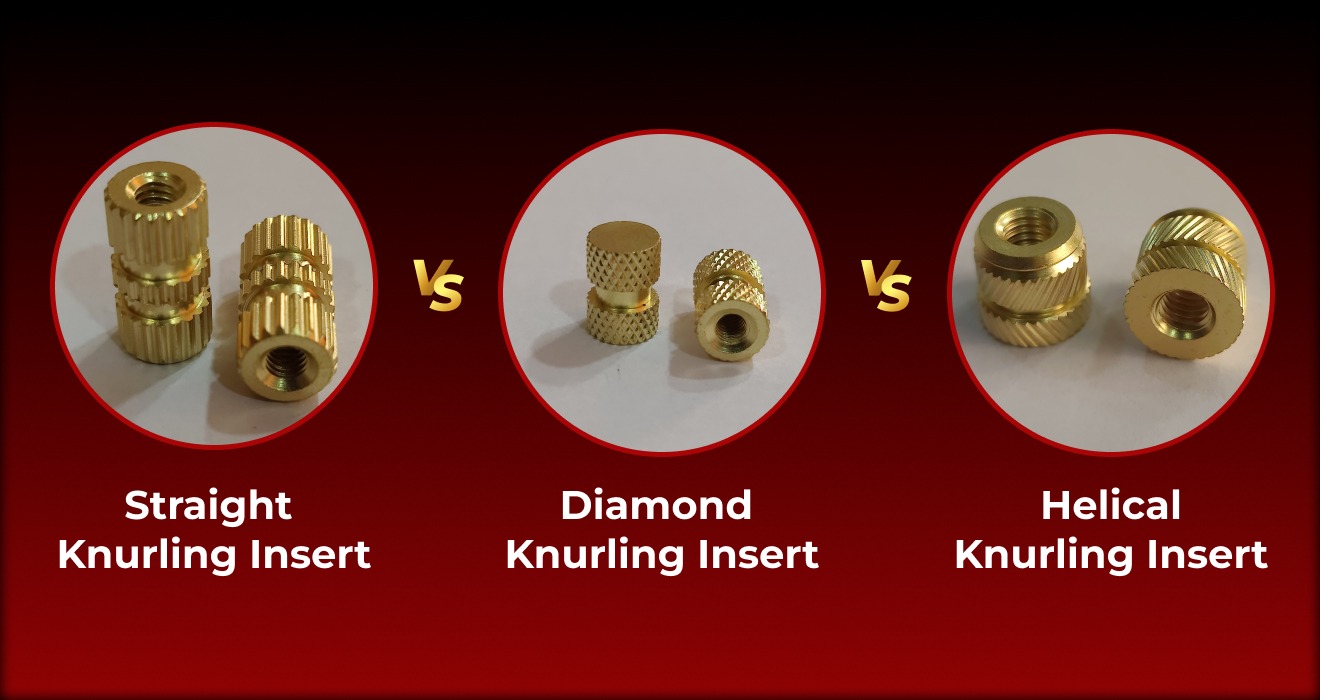
Threaded inserts are available in various shapes, sizes, and configurations to meet a range of application requirements.
Types of threaded inserts
- Hexagonal Inserts (Types NFPA, NFPC)
- Provide strong, reusable threads.
- No heat or ultrasonics required for installation.
- Hexagonal “barbed” design offers excellent torque-out and pullout strength.
- Blind Threaded Inserts (Types IBA, IBB, IBC)
- Available in stainless steel, brass, and aluminum.
- Features a blind end to protect threads from plastic intrusion.
- Ideal for preventing contamination inside the insert.
- Self-locking Blind Threaded (Type IBLC)
- Made of stainless steel.
- Have deformed threads that lock screws in place, resisting vibration.
- Blind ends prevent plastic from entering the threads.
- Thru-threaded (Types ITA, ITB, ITC)
- Include pilot diameter and undercuts that allow plastic to flow into grooves.
- This design provides high pullout resistance.
- Commonly available in aluminum and brass.
- Knurled Spacers (Types STKA, STKB, STKC)
- Thru-threaded spacers with a uniform knurl diameter to reduce sink marks.
- Manufactured in aluminum, brass, or stainless steel.
- Offered in different lengths for injection molding assemblies.
- Tapered (Types IUA, IUB, IUC)
- Designed for use in tapered mounting holes.
- The tapered shape allows for fast and accurate alignment during installation.
- Available in aluminum, brass, and stainless steel.
- Flanged (Type PFLA, PFLB)
- Features a flange head to prevent direct plastic-to-metal contact.
- Cold pressed-in, requiring no heat or ultrasonics.
- Slotted design allows for easier access to mounting holes.
- Offered in aluminum and brass.
- Straight Wall (Types IUTA, IUTB, IUTC)
- Designed for straight holes.
- Self-aligning lead-in ensures accurate placement before installation.
- Available in aluminum, brass, and stainless steel.
Hexagonal inserts are cold pressed-in and available in both aluminum and stainless steel.
Benefits of using threaded inserts
- Provide strong, reusable threads in soft or thin materials.
- Improve torque-out and pullout strength for durable connections.
- Offer options that resist vibration and wear.
- Allow easier repairs and maintenance by replacing only the insert, not the base material.
- Reduce damage to surrounding materials during assembly.
Key factors to consider when selecting threaded insert
- Material
- Stainless steel – Ideal for outdoor or corrosive environments.
- Aluminum – Lightweight and lead-free alternative.
- Brass – Commonly used for its durability and cost-effectiveness.
- Size
- Too large: weak fit and reduced strength.
- Too large: weak fit and reduced strength.
- Cost
- Balance budget constraints with the long-term benefits of durability and reliability.
- Cold pressed-in options are more cost-effective but may have lower strength compared to heat-staked or
ultrasonic options. - Thread configuration
- Installation method
- Cold press-fit inserts – Simple and cost-effective, requiring only basic press.
- Heat-staking or ultrasonic methods – Suitable for thermoplastics, providing stronger bonds.
- Molding-in options – Used with thermoset plastics during the molding process.
- Strength requirements
- Longer inserts increase the pullout capacity.
- Wider inserts improve torque-out strength.
- For high-vibration environments, use self-locking designs.
- Environment
- Outdoor use – Stainless steel for corrosion resistance.
- High temperature – Select inserts that maintain structural integrity at elevated temperatures.
- Chemical exposure – Choose compatible materials to prevent degradation.
The insert material impacts its strength and corrosion resistance.
Accurately measure the hole before selecting the insert.
Cost plays a vital role, especially for large-scale manufacturing.
Match the insert’s thread to the screw or bolt being used. Incorrect thread pitch can cause loosening or failure under stress.
Plastic Applications
Threaded inserts are frequently used with two primary types of plastics:
- Thermoplastics
- Can be melted and recast repeatedly.
- Installation methods include heat-staking and ultrasonic insertion.
- Thermoset Plastics
- Permanently set during molding and cannot be altered once hardened.
- Inserts are typically molded-in or cold pressed-in during manufacturing.
Selecting the right threaded insert is essential for achieving a secure and reliable connection. By carefully considering factors such as material, size, installation method, strength requirements, and environmental conditions, you can ensure that your assembly is durable and long-lasting. We provide a wide selection of high-quality threaded inserts, making it easier to find the perfect solution for specific application needs.
Get in touch with Ravi Products for all threaded inserts and fastening solution needs. Whether you want to request a quote, discuss bulk orders, or get expert guidance on selecting the right product, our team is here to assist you. You can call us at +91 288 2730297 a or email us at export@raviproducts.com, and we’ll be happy to provide prompt support and solutions tailored to your requirements.