
Aluminum vs Steel Inserts: What are the pros and cons? How to balance performance and cost?
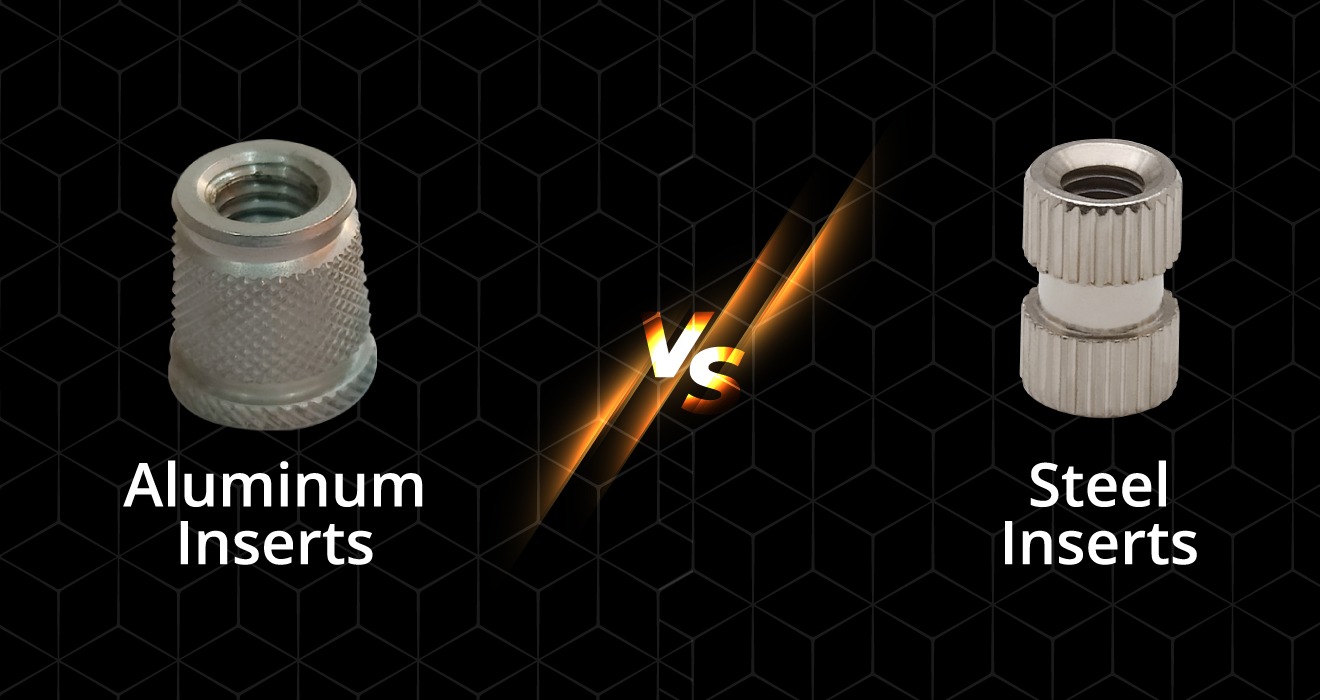
Selecting the right type of inserts is a critical first step in manufacturing, assembly, or repair processes, as it directly affects the performance, durability, and overall cost-efficiency of the application. Aluminum and steel inserts each offer unique advantages, with their suitability varying based on the specific requirements of the project. At Ravi Products, we recognize the importance of choosing the appropriate insert material to ensure long-lasting and efficient results. That’s why we provide both aluminum and steel inserts, expertly crafted to meet the diverse needs of industrial and commercial applications.
Know more about Aluminum Inserts
The lightweight and highly corrosion-resistant qualities of aluminum inserts make them especially valuable. With a low density of 2.7 g/cm³, they are ideal for applications where minimizing weight is a priority. This weight advantage makes aluminum inserts highly suitable for automotive and aerospace applications where reducing mass is critical.
Though not as strong in its raw form as steel, aluminum strength can be enhanced through heat treatments, resulting in tempers like H14, T3, and T6. These treated alloys can match or exceed the tensile strength of brass and mild steel. Additional benefits include excellent thermal and electrical conductivity, non-magnetic behavior, and ease of machining due to its softness.
Know more about Steel Inserts
Steel inserts, including both stainless and carbon steel varieties, are selected primarily for their high strength and durability. Stainless steel offers excellent corrosion resistance and has roughly twice the tensile strength of comparable brass inserts, making it ideal for marine and industrial environments exposed to moisture, chemicals, and pressure.
Carbon steel inserts are coated with materials such as zinc, nickel, or chromium to improve corrosion resistance. These inserts provide superior strength and wear resistance compared to brass and are commonly used in heavy-duty applications. However, both stainless and carbon steel are harder to machine, which can increase manufacturing time and cost.
Pros and Cons Comparison
| Aluminum Inserts Pros | Aluminum Inserts Cons |
|---|---|
| Lightweight (3x lighter than brass) | Softer; lower fatigue strength than steel or brass |
| Naturally corrosion-resistant | Vulnerable to corrosion in salty environments |
| Excellent thermal and electrical conductivity | High thermal expansion can cause loosening/misalignment |
| Easy to machine; lower tooling cost | Thread stripping risk under repeated load |
| Strength can be enhanced with heat treatment (H14, T3, T6 tempers) | More expensive than carbon steel per unit weight |
| Pros | Cons |
|---|---|
| Very strong; withstands high mechanical loads | Heavier than aluminum |
| Stainless steel: excellent corrosion and rust resistance | Carbon steel requires coating to prevent corrosion |
| Durable for repeated screw/bolt insertions | Harder to machine; increases tool wear and machining time |
| Suitable for high-stress and industrial environments | May damage surrounding soft materials during installation due to hardness |
| Carbon steel is cost-effective compared to stainless | Stainless steel inserts are more expensive than brass or aluminum |
| High wear resistance | Some carbon steels are magnetic, which may be undesirable in some applications |
| Stainless offers heat resistance up to 2500°F (1371°C) | Can become brittle at very low temperatures (stainless) |
Use Case Scenarios
Choose Aluminum Inserts when weight savings are a priority, such as in automotive or aerospace applications, or when excellent thermal conductivity and corrosion resistance are required.
Choose Steel Inserts for applications demanding high mechanical load-bearing capacity, repeated thread usage, or long-term exposure to harsh conditions such as in marine or heavy machinery environments.
Industry-Specific Considerations
- Aerospace: Aluminum inserts for weight savings and conductivity.
- Automotive: Aluminum is ideal for lightweight components, while carbon steel provides strong
structural support. - Marine: Stainless steel for corrosion resistance.
- Heavy Machinery: Carbon steel inserts for durability and load resistance.
- Electronics: Aluminum for conductivity and machinability.
- Railway and Agriculture: Carbon steel for strength in rugged conditions.
Environmental and Sustainability Factors
Both aluminum and steel inserts are highly recyclable, retaining their original properties even after multiple recycling processes. Aluminum offers advantages in applications prioritizing low weight and sustainability due to its lower density and high recyclability. Steel’s widespread availability and strength-to-cost efficiency also contribute to its sustainable use in long-term applications.
Conclusion
Aluminum and steel inserts each serve specific performance roles. Aluminum offers unmatched advantages in weight, corrosion resistance, and machinability, especially when enhanced through tempering. Steel, whether stainless or carbon, provides superior strength and wear resistance for high-stress or repeated-use applications. The decision ultimately depends on the application’s mechanical, environmental, and economic requirements.
Looking for more information about our threaded inserts, including aluminum, stainless steel, or carbon steel inserts? The team at Ravi Products is here to help you choose the right solution for your application. We’re just a click away. Contact us via Email or use our Request a Quote form and get expert guidance backed by quality and reliability.