

DIN 16903 vs DIN 7965 Inserts: Key Differences and Applications!
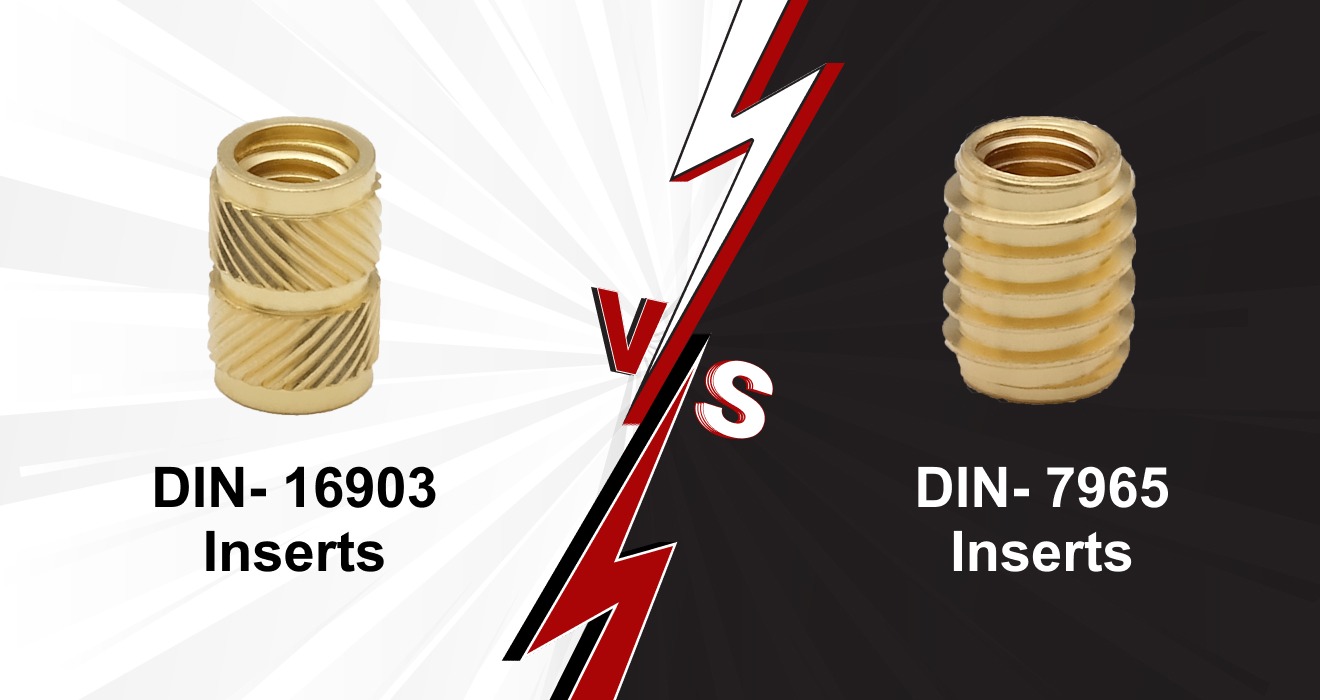
Threaded inserts play a critical role in improving the strength, durability, and service life of threaded joints in a wide range of engineering applications. Among the commonly referenced standards for threaded inserts are DIN 16903 and DIN 7965, both of which define inserts designed to reinforce threads in softer base materials such as plastics, light alloys, and cast metals. Although these two standards serve a similar purpose, they differ in design characteristics, installation methods, and typical use cases. Understanding the key differences between DIN 16903 and DIN 7965 inserts is essential for engineers and designers to select the most suitable solution for achieving reliable fastening performance, an area where Ravi Products is recognized for supplying high quality threaded inserts that meet these DIN standards and support dependable fastening solutions across diverse industrial applications.
DIN Standards
DIN standards define specifications related to dimensions, materials, performance, and quality requirements. Inserts manufactured according to DIN standards are designed to meet quality, performance, and value expectations, while also allowing customization based on specific project requirements.
DIN 16903 Threaded Inserts
- With threaded blind hole
- Deep groove design for maximum pull-out resistance
- Available knurling options: Diamond, Straight, Unidirectional
- Threads manufactured as per International Go & Not Go Standards
- Available in various materials, designs, sizes, and thread types
- Brass: C3604, Brass IS-319 Type-1, C36000, CuZn39Pb3, CuZn39Pb2, CuZn38Pb2, CuZn38Pb1.5
- Steel: EN1A/EN1AL, 12L14, 11SMNPB30, 9SMNPB28
- Aluminum: EN AW-6060, EN AW-6061, EN AW-6082
- Special metal material composition as per customer requirements
- Designed for durability, precision, and reliability
- Engineered to meet quality, performance, and value expectations
- High pull-out resistance due to deep groove and knurled design
- Suitable for secure and repeatable assembly and disassembly
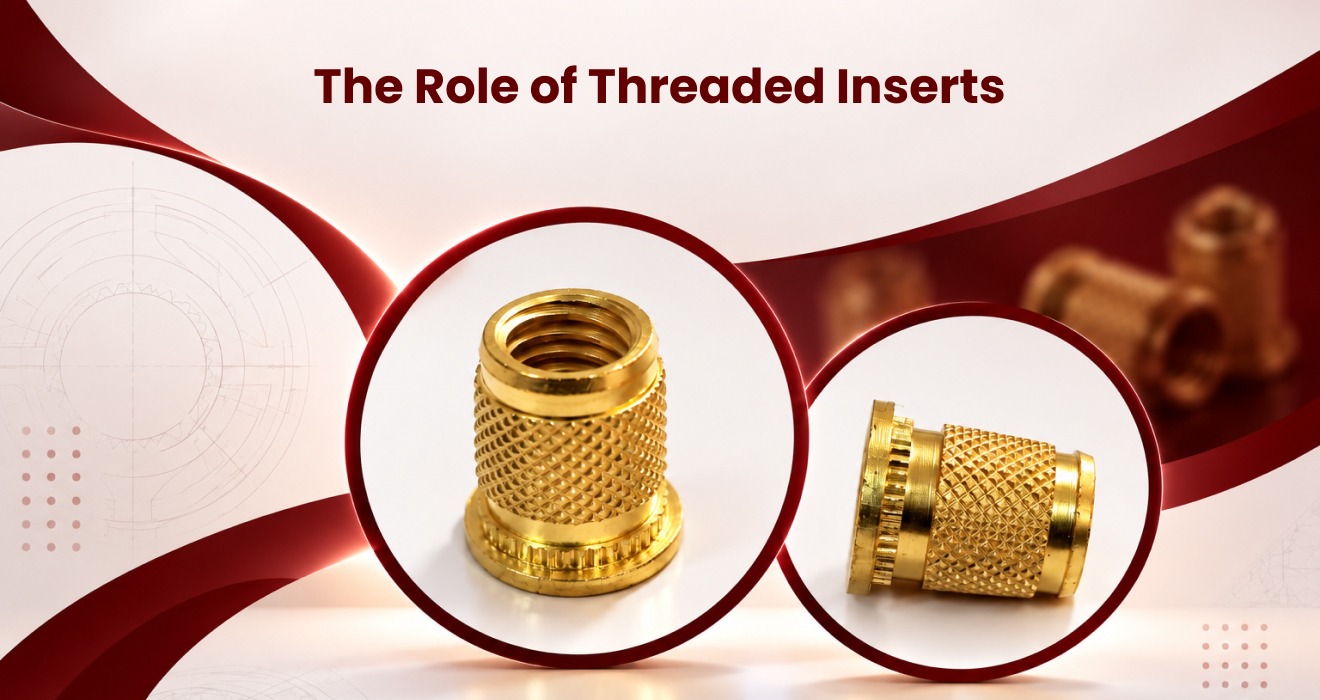
A. Definition and Scope: DIN 16903 inserts are knurled threaded inserts designed for over moulding. They are also known as brass knurled threaded inserts and feature a threaded blind hole. These inserts are manufactured as per DIN standards and customer-specific requirements, with availability across multiple international markets.
B. Design Characteristics
C. Material Options:
D. Threads Available: ISO Metric (MM), BSP, BSPT, NPT, BSW, BSF, UNC, UNF, BA, and other standard or custom threads.
E. Surface Finishing: Any finishing or coating as per customer requirement.
F. Performance Characteristics
DIN 7965 Inserts
- Screwed insert design with precision-cut threads
- Facilitates easy insertion and secure engagement
- Available in a wide range of materials, sizes, designs, and thread standards
- Brass: C3604, Brass IS-319 Type-1, C36000, CuZn39Pb3, CuZn39Pb2, CuZn38Pb2, CuZn38Pb1.5
- Steel: EN1A/EN1AL, 12L14, 11SMNPB30, 9SMNPB28
- Aluminum: EN AW-6060, EN AW-6061, EN AW-6082
- Special metal material composition as per customer requirements
- Provides solid and durable threaded connections
- Maintains integrity even under high loads
- High resistance to wear and tear
- Increases durability in difficult environmental conditions
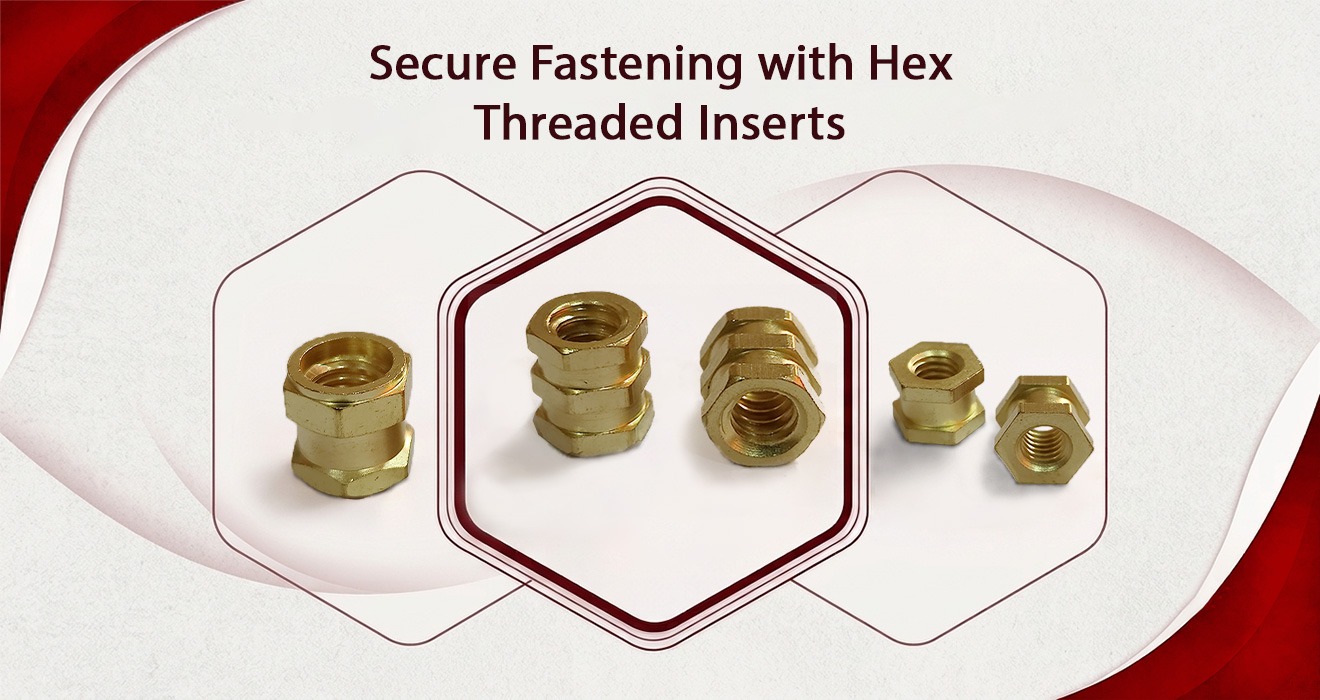
A. Definition and Scope: DIN 7965 screwed inserts are designed to provide robust threaded connections. These inserts are manufactured as per DIN standards and custom requirements, offering precision and reliability for demanding applications, especially where wood is the primary material.
B. Design Characteristics
C. Material Options:
D. Threads Available: ISO Metric (MM), BSP, BSPT, NPT, BSW, BSF, UNC, UNF, BA, and other standard or custom threads.
E. Surface Finishing: Any finishing or coating as per customer requirement.
F. Performance Characteristics
Key Differences Between DIN 16903 and DIN 7965 Inserts
- DIN 16903 inserts are knurled threaded inserts designed primarily for over moulding and plastic assemblies.
- DIN 7965 inserts are screwed inserts designed to provide strong threaded connections, particularly in wooden structures.
- DIN 16903 focuses on pull-out resistance through knurling and deep grooves, while DIN 7965 focuses on load-bearing capacity and wear resistance through screw-type engagement.
Applications and Use Cases
- Instrumentation and telecommunications assemblies
- Plastic cases and molded housings
- Automotive components such as dashboards, door panels, and interior trim pieces
- Securing covers, connectors, internal components, handles, and brackets in molded parts
- Furniture industry and wooden construction
- Structures where wood is the primary material
- Applications exposed to loads requiring solid mounting and long service life
- Automotive applications including trim panels, dashboard components, and door handles
- Products requiring repeated disassembly and reassembly
A. DIN 16903 Knurled Threaded Inserts:
B. DIN 7965 Screwed Inserts:
Conclusion
DIN 16903 knurled threaded inserts and DIN 7965 screwed inserts are produced using quality materials and precision manufacturing to ensure durability and reliable performance across industrial, automotive, and structural applications. We are a leading manufacturer of industrial inserts offering in multiple material and customization options. To request a quote, contact us via export@raviproducts.com or call at +91 97253 14757.